

Erratic Signs – Redesigning mountain languages through type design
An immersive type design experience exploring the relationship between body, language, and alpine landscape

This article analyzes Erratic Signs, a type design workshop held in an alpine environment at Lagazuoi EXPO Dolomiti (October 3–5, 2025), as an exploratory design research experience on the language of signs in relation to the landscape. In light of the increasing tourist influx in the Dolomites and the consequent challenges in terms of safety and environmental communication, the project investigates the role of type design as a cultural device capable of complementing functional orientation with additional levels of interpretation and awareness.
Through walking as a method of observation, translating individual perceptions into sign systems, and reflecting on the materiality and permanence of language, Erratic Signs proposes a reinterpretation of alpine signage as a tool for reorientation, capable of restoring complexity to the experience of the mountain landscape.
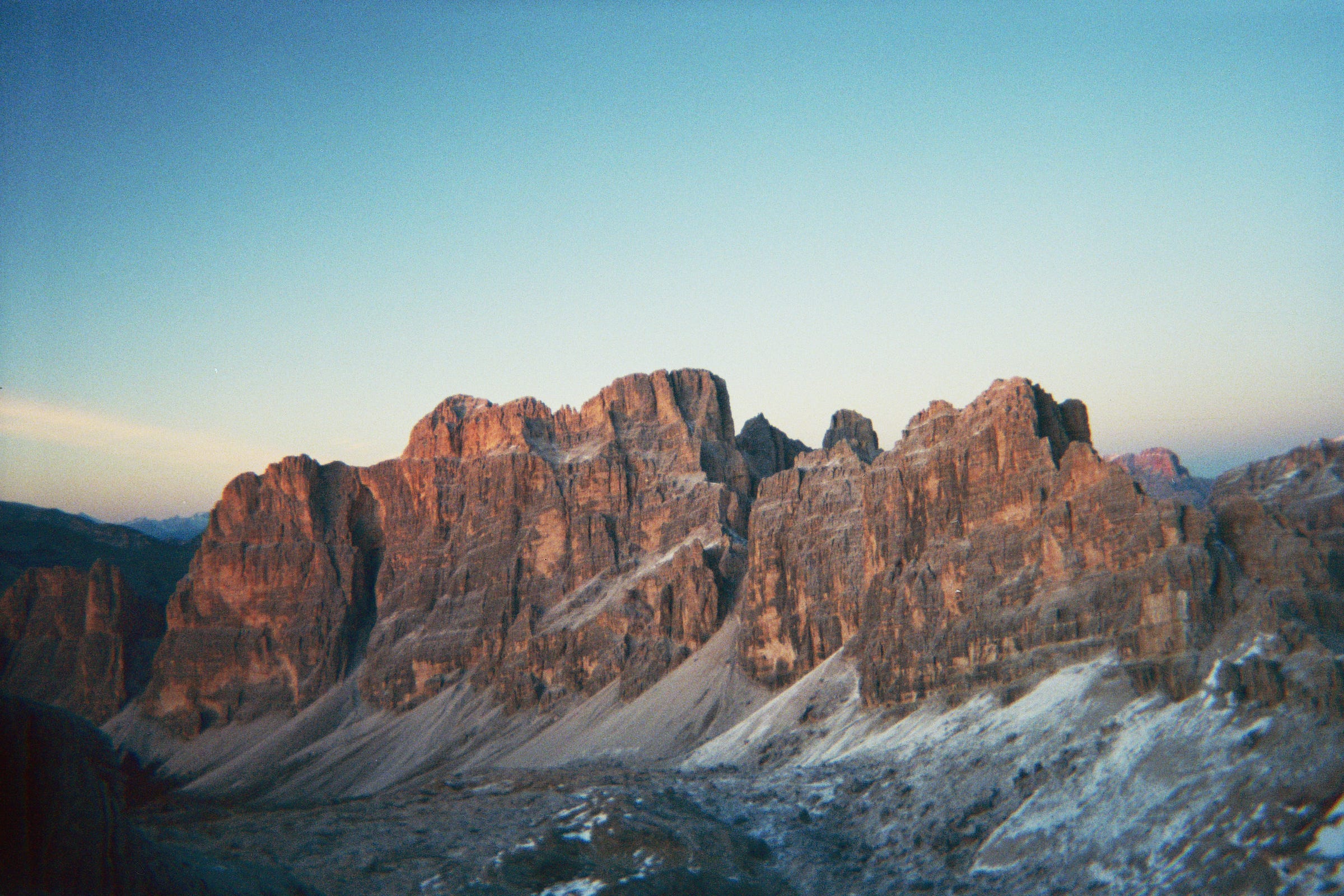
Since 2020, in the post-pandemic era, mountain environments have seen a significant increase in visitors, particularly foreign tourists. In the Belluno Dolomites alone, in 2024 there were 4,018,240 overnight stays, marking a +7.3% increase compared to 2019, with a +28.2% growth in foreign visitors (APT Dolomiti Bellunesi 2024, data reported by News in Quota and Bellunesi nel Mondo, March 2025).
While these numbers testify to the renewed attractiveness of the territory and positive economic impacts, they also bring challenges. The rise in inexperienced visitors, often unaware of the specificities of the alpine environment, reduces safety margins. According to the 2024 Annual Report of the Italian National Alpine and Speleological Rescue Corps (CNSAS), there were 12,063 mountain rescue missions in Italy that year, assisting 11,789 people. The main causes of accidents were falls or slips (43.2%) and errors or lack of skill in the undertaken activity (26.5%).
These data gain further relevance in view of the 2026 Winter Olympics in Milan–Cortina, an event that will draw international attention to the Dolomites and require reflection on prevention, communication, and territorial management strategies. In this scenario, it becomes central to ask how the landscape is traversed, read, and understood by an increasingly heterogeneous audience.
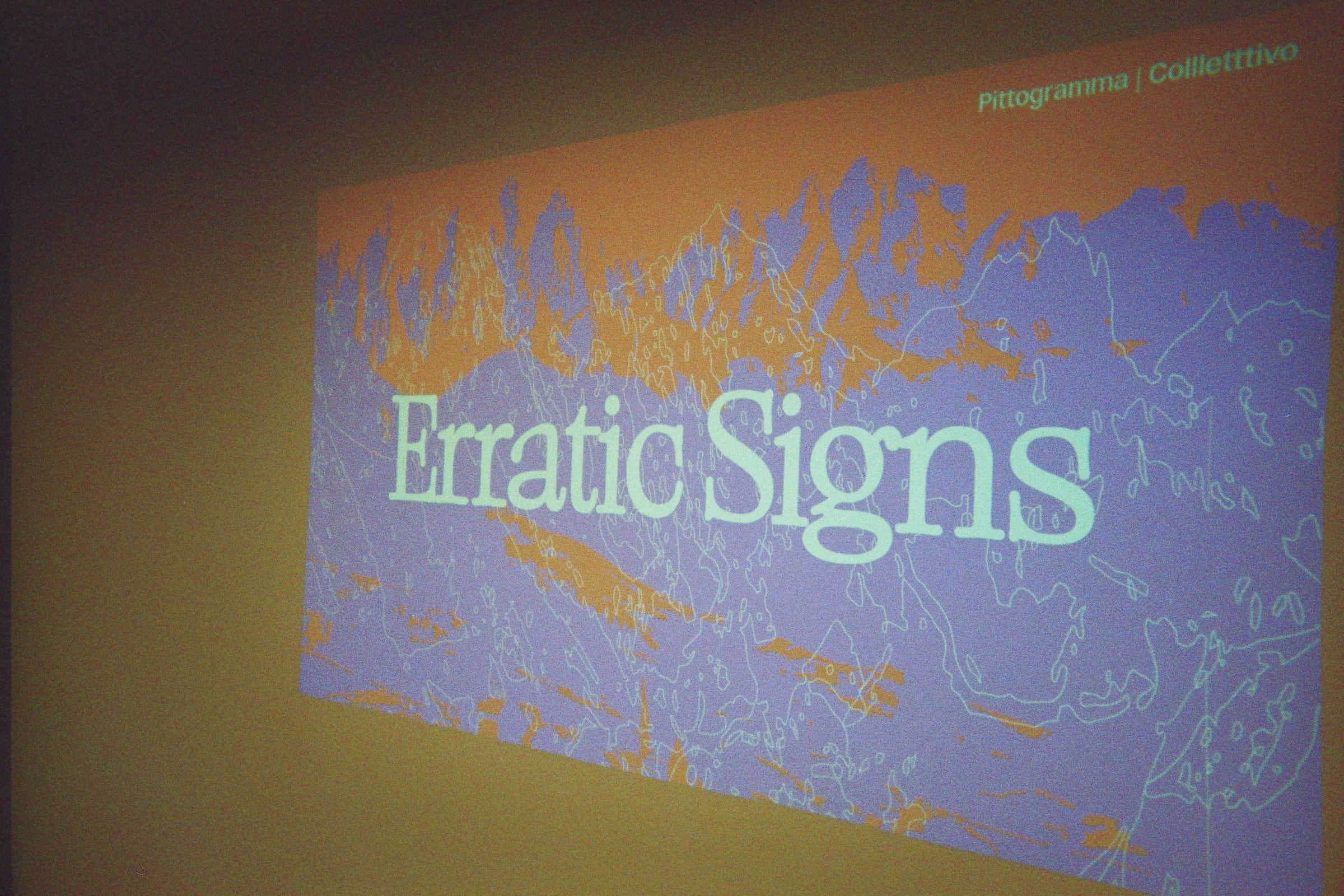
It is in this context that Erratic Signs was born, a type design workshop conceived by Pittogramma in collaboration with the independent, open-source type foundry Collletttivo, hosted at Lagazuoi EXPO Dolomiti on October 3–5, 2025.
Since 2021, with the publication of P01 – Caratteri Inediti, Pittogramma has initiated a series of activities aimed at promoting and developing type design in Italy through workshops, publications, and forums for building a critical and design-oriented community. Erratic Signs fits within this vision by offering an alternative educational experience to traditional academic and professional contexts, responding to the need to experiment with situated and interdisciplinary design practices.
Pittogramma and Collletttivo share an independent spirit and a design vision oriented toward constant dialogue between graphic practice, territory, and visual culture. Erratic Signs was born from the need to interrogate mountain communication languages and explore visual systems capable of starting from individual experience to extend to a collective dimension.
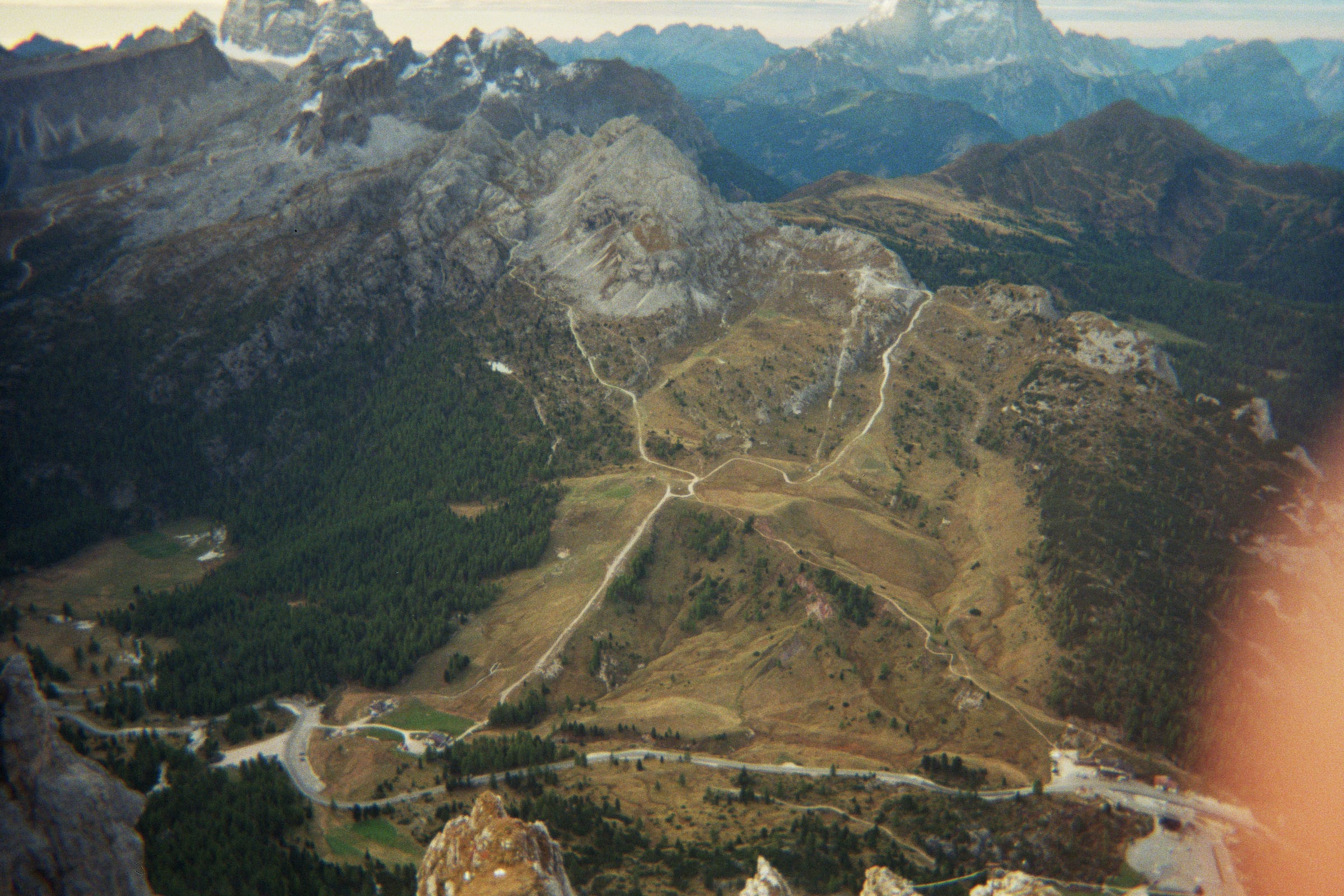
During the three-day workshop, participants mapped the trail from Passo Falzarego to Lagazuoi EXPO Dolomiti, translating stimuli, observations, and personal perceptions into graphic signs and typographic systems.
Sign, engraving, and environmental language
Before being graphic or typographic, a sign is an environmental device. The earliest forms of human visual communication—stone engravings, cave paintings, territorial markings—arose from the need to leave traces in space, convey information in absence, and guide behavior. The natural medium is not merely a container but an integral part of the message: the sign adapts to the material, scale, and permanence of the place in which it is inscribed.
From this perspective, type design can be seen as a continuation of an original tension between language and environment. Even alpine signage, with its color and formal conventions, inherits a tradition of signs designed to endure over time, be legible under difficult conditions, and convey essential information. Erratic Signs positions itself along this trajectory, questioning the sign not only as a functional tool but as a cultural act capable of connecting body, territory, and collective memory.
Toward a language of the mountain
From these processes, diverse and complementary sign systems emerged: some participants focused on the slopes of the ascent, creating synthetic symbols capable of encoding the progress of a trek; others concentrated on points of interest that marked different stages and landscapes, developing descriptive glyphs of spatial transitions; others, in a more introspective vision, translated their own breath—as a variable flow to be given weight and interpretation—into rhythmic and cadenced forms.
In Erratic Signs, the mountain landscape was explored as a space of observation and visual translation. Through walking as a methodological practice, participants built alphabets and sign systems from their perceptions, transforming physical, environmental, and sensory stimuli into graphic forms.
The workshop is framed as an exploratory qualitative design research. The goal was not to produce immediately applicable alternative signage but to investigate the possibility of additional sign systems capable of complementing practical orientation with other levels of information and landscape interpretation.
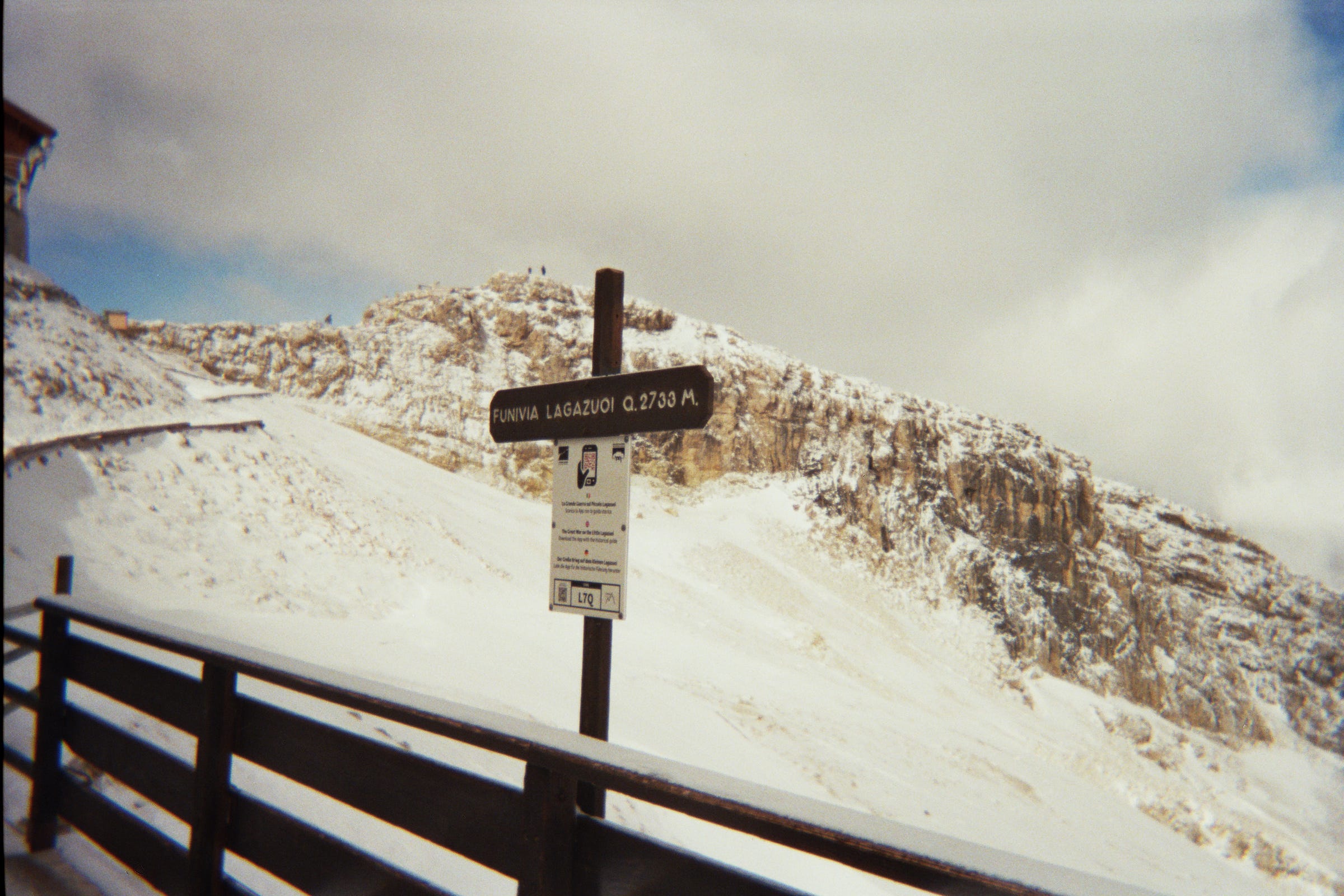
The current signage system of the Italian Alpine Club (CAI), in use since the mid-19th century and inspired by the Austro-Hungarian model of white and red marks, represents a consolidated and effective system. However, changes in audience, infrastructure, and modes of mountain use make it necessary to reflect on its limits and potential integration. The glyphs developed during Erratic Signs are not intended to replace existing signage but to highlight aspects of the alpine experience often left implicit.
The abstraction process leading to the creation of the signs stemmed from reducing experience to its essential components. The glyphs do not merely represent places but atmospheres, rhythms, conditions, and emergent relationships along the trail, constructing an open code between physical reality and sensory memory.
Project Expansion
In an effort to broaden the scope of the workshop and make it more communicatively legible, attention gradually shifted from the emotional to the informative dimension. The goal was to translate the symbolic elements into a language capable of conveying knowledge and awareness.
Increasing accessibility of high-altitude areas has made the mountains more inclusive but also more spectacularized, often reduced to aesthetic scenery and a surface to consume. In this context, language can act as a critical filter: inventing a sign system is less about orientation and more about reorienting the experience, reactivating attention and restoring depth to the act of walking.
Accessibility does not necessarily coincide with the presence of a shared lexicon. Many behaviors and attentions required by the alpine environment are unknown to new visitors. In this sense, signage is not merely a functional tool but a cultural system that helps shape how the territory is traversed and interpreted.
Workshop structure
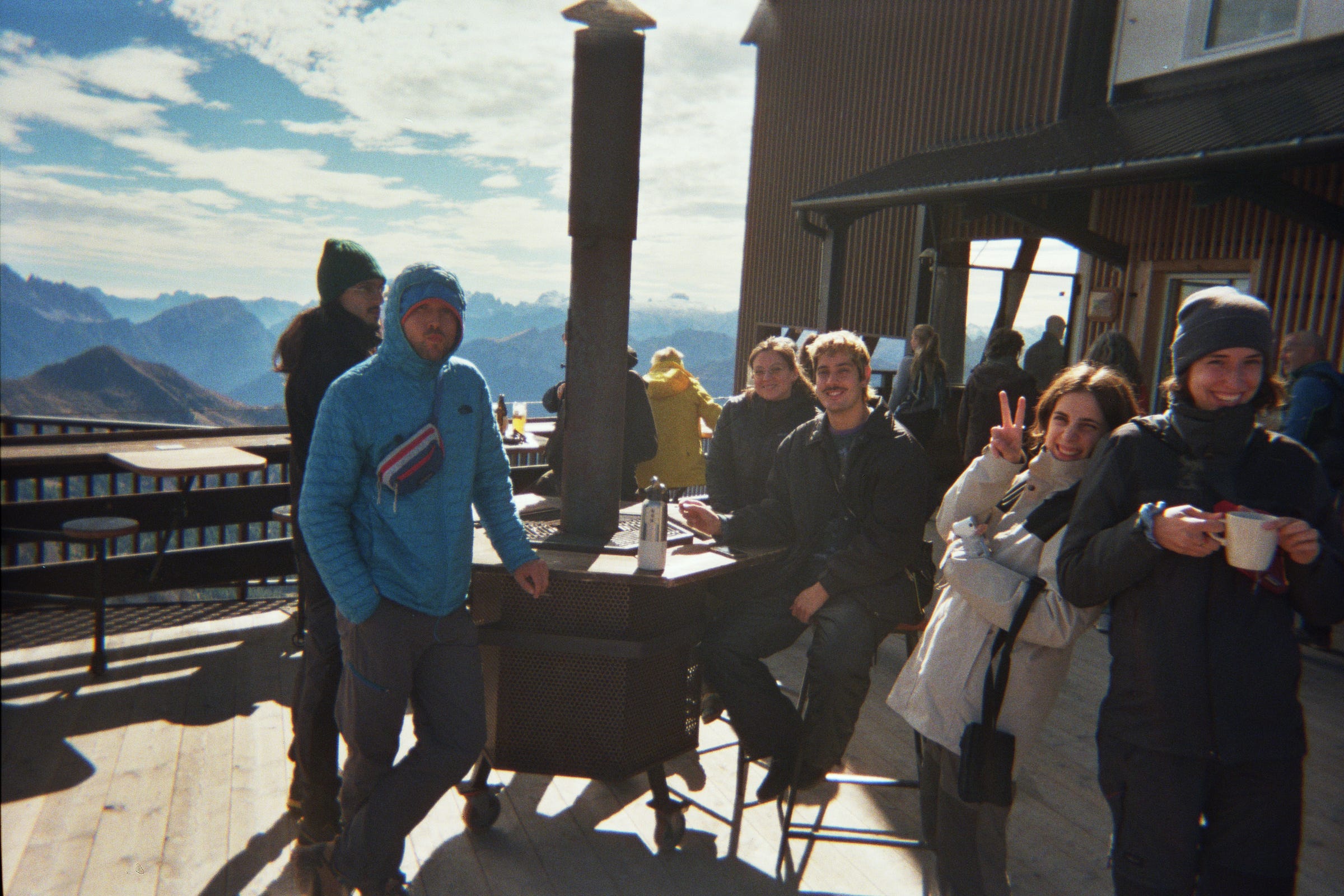
The workshop involved six participants from different geographic and professional backgrounds and was structured as a process of observation, research, and translation of individual experience.
The work was organized into three distinct phases. The first phase involved free collection through notes, images, and sketches in a notebook, serving as an immediate recording tool of perceptions and observations. The second phase introduced formal experimentation using basic tools—pencils, pens, and rulers—to investigate typographic constructions, proportions, and rhythm. The final phase consisted of engraving the signs on wooden panels with a pyrography tool, introducing reflection on materiality, permanence of the sign, and the relationship between design and territory.


Conclusions
Although configured as exploratory and situated research, Erratic Signs opens the way to potential developments linked to the specific context of Lagazuoi EXPO Dolomiti. The project aims to complement orientation with a broader narrative of the walking experience, capable of conveying its complexity without oversimplification.
The workshop’s limitations—the small number of participants and the specificity of the context—clarify its non-generalizable nature but do not diminish its value. Erratic Signs does not offer definitive solutions but tools for inquiry. In a historical moment characterized by intense and heterogeneous tourist flows, designing languages capable of teaching people to “read” the mountains becomes both a cultural and design act.
The mountain thus emerges not as a place of individualism but as a complex system requiring attention, responsibility, and the ability to coexist with a plurality of actors—weather conditions, geological formations, ecosystems, human presence, and sign systems.
The article was written by Fabio Mario Rizzotti (Pittogramma), Matteo Maggi, and Sara Lavazza (Collletttivo).